
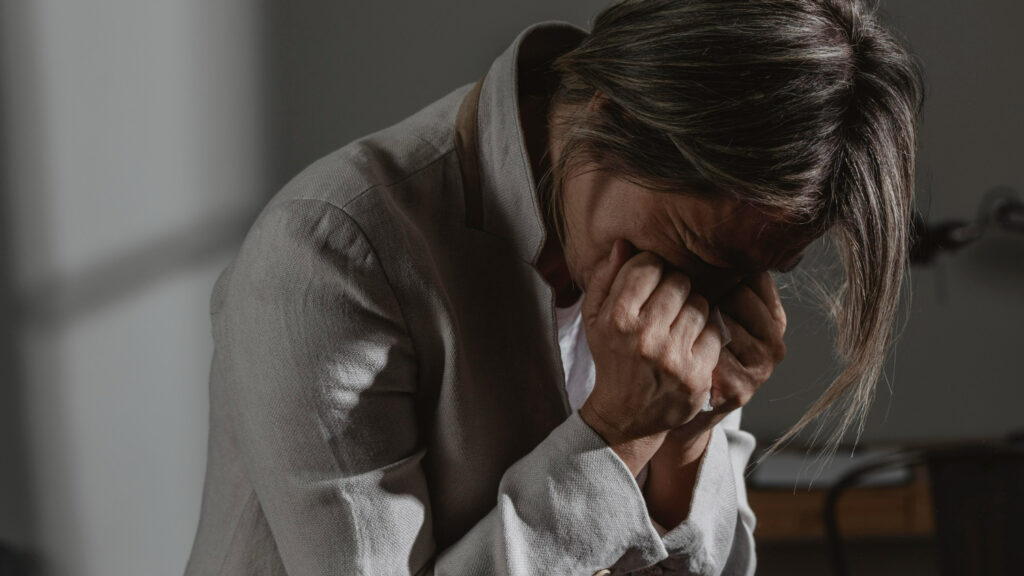
Have you ever been plagued with worry? Your thoughts bouncing from one worry to the next? Have you ever felt trapped by your own thoughts and emotions? Do you ever overthink a thousand ways things can go wrong, only to find you’ve worried yourself sick for no reason? Have you ever experienced a panic attack, and then realised you had begun a vicious cycle of fearing another one? Living with anxious thoughts and feelings can be crippling indeed.
Why does anxiety exist?
Anxiety (or fear) is often created by our minds as a protective mechanism for what the mind perceives as danger. Our human race started about 300,000 years ago, and at that time anxiety was a very effective tool for staying alive as long as possible. Considering your day may have included being chased by a large predator that intended on having you for lunch, having a finely tuned anxiety mechanism was a great way of making it back to your cave. Likewise, a good dose of anxiety fueled insomnia, was also a very effective way to make it through a night of howling beasts that may wander into your cave at any moment.
Fast forward to our modern times after 300,000 years of the evolution of anxiety in our human genes, where on the most part we rarely have to dodge large animals that see us as a tasty dinner. Instead, our finely tuned danger antenna picks up on our current day danger signals, like mean bosses that might fire us at any moment, interest rates that threaten to make us homeless, or awesome press articles in the media predicting a future armageddon. Strangely, these outcomes rarely come to pass for most of us, but that doesn’t stop our protection tool from doing a great job in protecting us.
Where are we going wrong with anxiety?
Unfortunately, with so much practice our danger antennas have become overused to the point that our minds manage to over-protect us from our perceived dangers. Instead of laughing off most worries as being unlikely to ever happen, we heartily take them on board and allow them to have an uncomfortable home in our heads. We all know someone that seems to skate through life, fearlessly charging through their days on a wing and a prayer, however for most of us our ‘danger rating thermometer’ tells us that even things that are unlikely to be a problem next week, have a danger rating similar to your last moments being devoured by a large angry animal.
How do we reset our danger thermometer?
To reset our danger thermometer, we need to work backwards from the anxiety and fear, and understand the path we chose to arrive at that place. There are many paths to an overactive danger thermometer, however some of the most common include:
- Not dealing well with uncertainty
- Believing in one’s own unlikely imagination
- Having a tendency to catastrophize
- By finding ways to change these habitual ways of thinking, we can enjoy a far calmer mind and existence.
How Counselling can make anxiety melt away
Most people start by believing that their anxiety results from factors outside of their control, but I will soon help you see how your habitual thought patterns are playing a large part in generating your anxiety in the first place, how they can make your anxiety worse than it need be, and how they also play a part in helping you hold on to the anxiety for longer than you need. I can then design very specific interventions that gives you alternative ways to respond to life’s ups and downs, and can help you recalibrate on what you need to feel anxious about, and how anxious you really need to be. Where you might have moved from 0 to 100 on the anxiety scale in a short space of time before, after counselling you may find that you only register a short blip of anxiety in certain situations, due to running a better internal evaluation of the situation that results in the perceived threat being much lower.